
My Wife Asked Me Three Questions Mid-Workout and I Almost Turned It Into a Fight
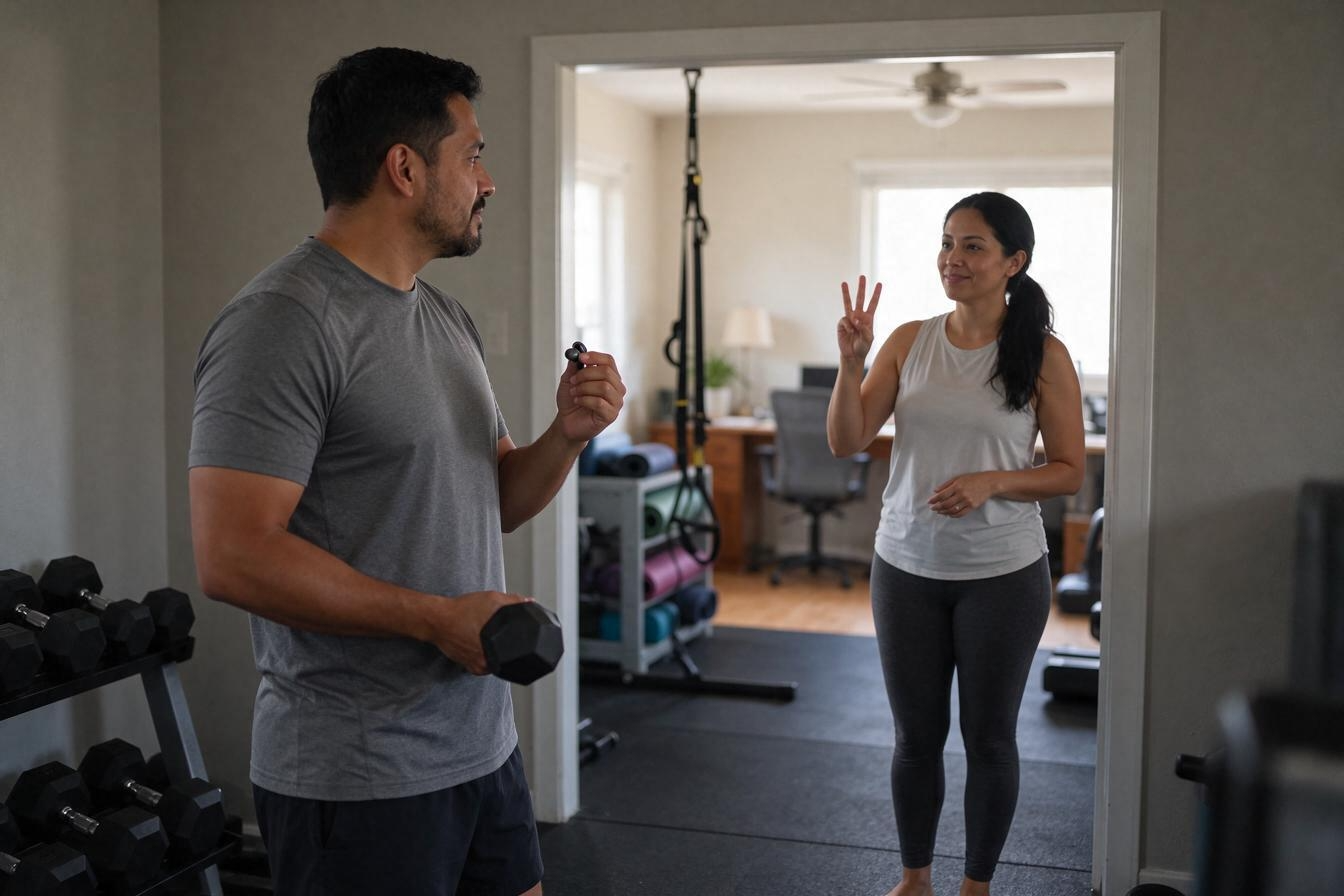
A few months back, Kim and I were working out in our home gym, which is really the other half of my office. She finished first and headed off to tackle her business to-do list. I still had a few sets left, so the earbuds went back in and the music went up.
Then Kim walked back in, sat down at my desk, and asked me a question. Earbuds out. Answer. Earbuds in.
Question two. Then question three, right on its heels.
By then I had a sarcastic comeback loaded and ready, and trust me, it wasn't winning any husband-of-the-year awards. Thankfully, I swallowed it and asked if we could talk once I finished my workout. "Sure," she said. "Come get me when you're done."
Close call. Now imagine if each of those questions had come with a number attached.
Put a Number on it
Without a shared signal, every "You won’t believe what happened at work today" lands like a fire alarm. Your pulse jumps, your shoulders tighten, and you brace for the worst before you've heard a single detail. Most of the time, the news is small. Your body just didn't get the memo.
Putting a number on it means agreeing on a simple scale ahead of time, say one to five. A ‘one’ is a small hiccup that can wait. A ‘three’ means one of you needs to step in today. A ‘five’ means drop everything, right now. Say the number first, and your partner knows exactly how to show up.
It's the same idea as my friend who's a pilot. When his wife asks him for something, he answers "Wilco!" That one word tells her he heard her and he's on it. No guessing. A shared code takes the guesswork out of the hard moments too.
How to Build Your Scale
Agree on it when things are calm. Pick a quiet evening, not a crisis. Talk through what a one, a three, and a five look like in your home. Write a few examples down.
Lead with the number. Before the story, give the rating: "Heads up, this is a two." Your partner can breathe while you talk.
Answer the number, not the noise. A one or two can wait for a better moment, as long as you say when you'll circle back. That's all I asked for in the gym. A five gets your full attention on the spot
Keep it honest. Don't call a two a five to get attention, and don't downplay a real five to keep the peace. The scale only works if you can both trust it.
Why You Should Give a Flip
When everything feels like an emergency, your body never hears the all-clear. That has a real cost. In a tense moment with your spouse, once your heart rate reaches ninety-five beats per minute, your frontal lobe essentially shuts down. That's where logic and reason live. Chris Cambas and I wrote about this in Kickass Husband, and it explains why the words you can't take back always seem to come out at the worst possible time.
Stay in that zone long enough and you're always on edge, quick to snap and slow to trust. A shared number gives you room to pause and respond based on your values instead of your adrenaline. It's a small act of grace you agree to ahead of time, and grace builds trust.
Not every problem is a five. Your marriage deserves to know the difference.
Your Turn
Tonight, ask your partner: "What would a five look like for us, and what's really just a one?"
If stress has everything in your house feeling urgent, schedule your complimentary Core Energy Session, and let's build a plan that brings the temperature down.
And remember,
Happily ever after doesn't just happen – it's on purpose.
